
Dog Diarrhea With Blood: What It Means and When to Call a Vet
Dog Diarrhea With Blood: What It Means and When to Call a Vet ! Veterinarian assessing a dog and bloody stool sample Bloody diarrhea in a dog should be treated as a reason to call a veterinarian the same day, not something to ride out at home.
Dog Diarrhea With Blood: What It Means and When to Call a Vet
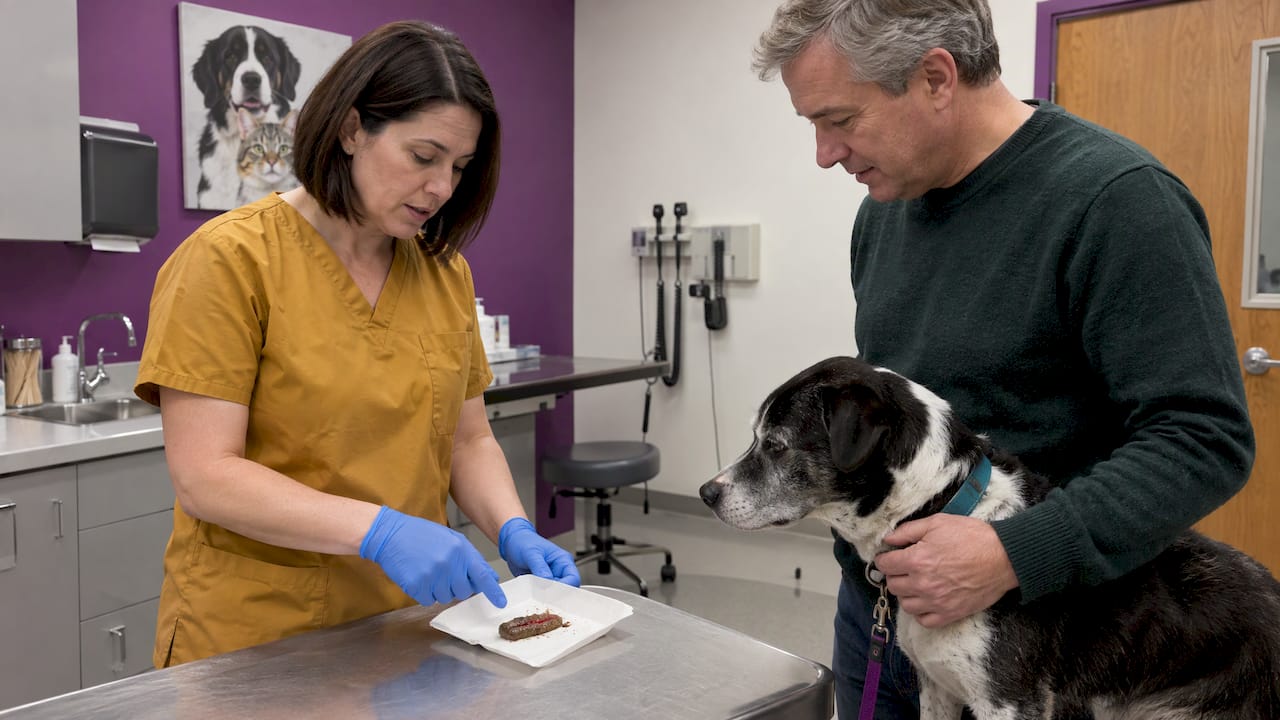
Bloody diarrhea in a dog should be treated as a reason to call a veterinarian the same day, not something to ride out at home. Most causes need specific treatment, and some are life-threatening. PetMD advises veterinary attention within 24 hours. If your dog is also lethargic, vomiting or not drinking, go sooner. Our team at Urban Veterinary Associates in Westmont sees sick dogs during open hours, and the sections below show what to look for and what to do while you arrange care.
TL;DR
- Bloody diarrhea needs a veterinarian, ideally within 24 hours. Same-day care is right if your dog is lethargic, vomiting, refusing water, has pale gums or is passing large amounts of blood.
- Bright red blood usually points to the colon. Black, tarry stool points higher up the digestive tract. Tell your vet which one you saw.
- Until the visit, keep fresh water available. Do not give human medications.
- Bring a fresh stool sample in a clean container, plus notes on when it started and what your dog ate.
- Call ahead. We are closed Thursday through Sunday except Friday, so plan around those hours.
Table of Contents
- What the color of the blood tells you
- When it is an emergency
- Common causes of bloody diarrhea in dogs
- Will it go away on its own?
- What to do before you get to the vet
- What happens at the visit
- Where to be seen
- Book a visit with us
- FAQ
- Sources
What the color of the blood tells you
The color is the first clue, and your vet will ask about it.
Bright red blood is called hematochezia: fresh, undigested blood. PetMD explains that red blood means the problem is in the colon, the large intestine. Mucus alongside it usually points to the colon too, and jelly-like diarrhea reflects severe colon inflammation.
Black, tarry stool is called melena. It is blood that has been digested on its way through, which means it came from higher up: the stomach, small intestine or even the esophagus. The AKC notes that bright red blood is not necessarily life-threatening, while tar-like stool signals an upper digestive tract problem.
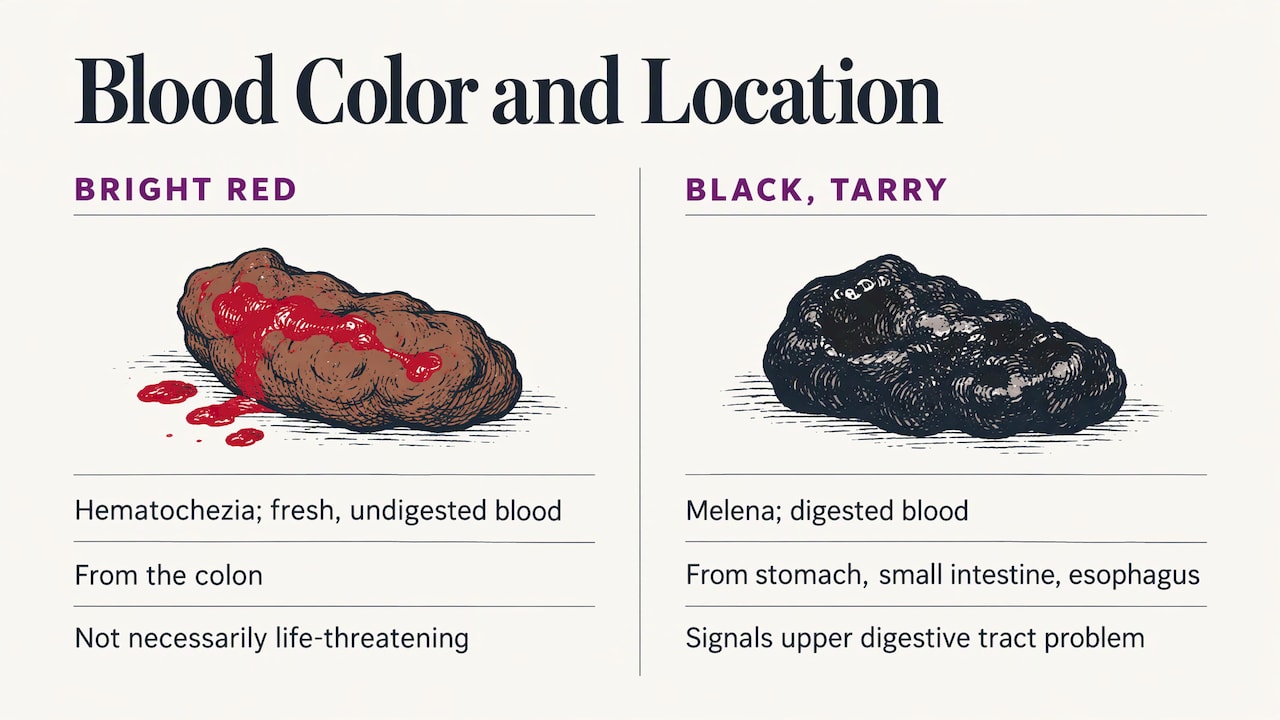
A few small streaks of red blood in otherwise normal stool, in a dog who is eating and acting like herself, is the milder end. Dr. Randy Aronson, quoted by the AKC, describes the serious end as large amounts of blood, dark tarry stool, jelly-like bloody diarrhea, frequent straining, or pure blood with no stool. Take a photo if you can stomach it. It helps your vet more than a description.
When it is an emergency
Go to a vet or emergency hospital right away if your dog has any of these:
- Large amounts of blood, or black, tarry stool
- Repeated vomiting along with the diarrhea
- Lethargy, refusing food or water, or collapse
- Pale gums
- A bloated, hard or painful belly
- Signs of dehydration, such as sunken eyes, tacky gums or skin that stays tented when gently lifted
- Possible poisoning, or a young puppy who is not fully vaccinated
That list draws on Tavi’s guide and the AKC’s advice on when to contact a vet immediately. If you suspect your dog swallowed a toxin, the ASPCA Animal Poison Control line is (888) 426-4435.
Why sudden bloody diarrhea moves fast
One cause vets know well is acute hemorrhagic diarrhea syndrome (AHDS). The Merck Veterinary Manual describes it as sudden bloody diarrhea with hemoconcentration, meaning the blood becomes thicker because the dog is losing fluid. Prompt IV fluids are the mainstay of treatment. Dogs can dehydrate quickly, which is why waiting a few days is the wrong plan when the stool is bloody and your dog is unwell.
The same manual notes that low white blood cell counts in a dog with hemorrhagic diarrhea can raise concern for sepsis or parvovirus, and that very slow clotting needs investigation. These are things your vet sorts out with bloodwork, not something you can judge at home.
Common causes of bloody diarrhea in dogs
PetMD lists a long range of causes. The ones owners most often meet:
- Intestinal parasites such as hookworms, whipworms and giardia
- Infections: bacterial, viral (including parvovirus) or protozoal
- Hemorrhagic gastroenteritis, the sudden, severe form described above
- Dietary indiscretion, meaning your dog ate something he should not have, or a foreign body or blockage
- Stress-induced colitis, inflammation of the colon after boarding, travel or a household upheaval
- Inflammatory bowel disease and pancreatitis
- Toxins, ulcers, clotting disorders, Addison’s disease, trauma and, less often, cancer
Because the list is so wide, guessing at the cause at home does not work. The visit is how you narrow it down.
Will it go away on its own?
Sometimes mild diarrhea resolves by itself. Cornell’s Riney Canine Health Center says most dog diarrhea is mild and self-limiting, but it advises seeking care if it lasts beyond 48 to 72 hours, is black or tarry, contains fresh blood, or comes with vomiting, loss of appetite or lethargy. Fresh blood is on that list by itself. So the practical answer for bloody diarrhea is: do not wait it out.
Cornell’s Dr. Meredith Miller adds that appetite loss and lethargy may only reflect belly discomfort, but they can accompany many illnesses, so a dog who does not bounce back quickly needs to be seen.
What to do before you get to the vet
- Call us or your vet first. Describe the color, amount and frequency, and whether your dog is vomiting or tired. We can tell you whether to come in right away.
- Keep water available. Dehydration is the main danger.
- Offer only a bland diet if your dog will eat. PetMD suggests plain cooked chicken with plain rice until the visit. If your dog refuses food, do not force it.
- Do not give human anti-diarrheals or pain relievers. Many are unsafe for dogs and can mask or worsen the problem.
- Collect a fresh stool sample in a clean container, as the AKC recommends.
- Write down the timeline: when blood first appeared, any diet or environment changes, and other symptoms like vomiting, appetite loss or signs of pain.
- Photograph the stool if possible.
What happens at the visit
PetMD describes the usual workup: a medical history and a physical exam, including feeling the abdomen and checking the rectum and anal glands. Depending on what your vet finds, tests can include fecal testing, bloodwork, a parvovirus or pancreatitis test, imaging, cytology and sometimes cultures or endoscopy. Treatment depends on the cause and how sick your dog is.
Our illness visit is priced at $95, and our published pricing page lists fees openly. If your dog needs further diagnostics, we itemize the plan line by line before anything starts, and you can decline any line. Diagnostics and imaging are part of what we do in the hospital, and some cases call for cytology.
Antibiotics are not automatic
Many owners expect antibiotics for any bloody stool. Current guidance is more careful. The 2024 ENOVAT guidelines, as summarized by VetMedGuide, recommend against antibiotics for mild acute hemorrhagic diarrhea in a bright, hydrated dog with no systemic signs, reserving them for severe disease with signs of sepsis or an identified pathogen. Supportive care, especially fluids when needed, is the core of treatment. Your vet decides which category your dog is in after an exam.
Where to be seen
For a dog who is stable but unwell, a same-day visit is often the right level of care. Our guide on urgent care for dogs explains when urgent care fits and when a dog needs an emergency hospital, and our walk-in versus same-day appointment article explains how to get in quickly. Dogs with collapse, pale gums or uncontrolled vomiting should go to an emergency hospital without delay.
Urban Veterinary Associates is Fear Free certified and AAHA accredited. For a dog who is already feeling miserable, gentle handling matters. We offer urgent care in Westmont during open hours. Please call ahead so we can be ready for you.
Our perspective
When an owner calls about bloody diarrhea, the most helpful thing we can do is get the dog seen quickly and explain every step. The color of the blood, the dog’s energy and the hydration level tell us a great deal before any test is run, so your observations at home matter.
We believe owners should know what a visit will involve and what it costs before it starts. That is why our prices are published and our plans are itemized, with the freedom to decline any line. A sick dog is stressful enough without a surprise bill.
We also believe gentle handling changes the exam. Fear Free care means a worried, uncomfortable dog is treated calmly from the moment she comes through the door.
Dr. Jessica Torok
Book a visit with us
If your dog has blood in the stool, call us first. We treat sick pets during open hours, with an illness visit at $95 and an itemized plan for any added testing. For longer-term gut and digestive health, our VIP Wellness Plans start from $45.99 per month and spread routine care across the year.

You can see everything we charge on our pricing page, or start at urbanpetvet.net.
FAQ
What can I do for my dog with bloody diarrhea?
Call a veterinarian and keep fresh water available. PetMD suggests only plain cooked chicken and plain rice until your appointment. Do not give human medications, and bring a fresh stool sample.
Will bloody diarrhea go away on its own?
Mild plain diarrhea often does, but fresh blood is a reason to be seen, according to Cornell. Waiting risks dehydration and delays treatment of causes such as parasites or infection. Call your vet within 24 hours.
Is bloody diarrhea in dogs always an emergency?
Not always, but it is never something to ignore. A little bright red blood in a bright, eating dog can be seen promptly. Large amounts of blood, black tarry stool, vomiting, lethargy or pale gums call for immediate care.
How long does dog diarrhea last?
Cornell says veterinary care is warranted if diarrhea has not resolved in 48 to 72 hours. With blood present, do not wait that long. Call as soon as you see it.
Sources
- Bloody Diarrhea in Dogs, PetMD
- Blood in Dog Poop: Signs, Symptoms and Treatment, AKC
- Diarrhea, Cornell University College of Veterinary Medicine
- Acute Hemorrhagic Diarrhea Syndrome in Dogs, Merck Veterinary Manual
- Dog Diarrhea: When to Worry vs. Wait, Tavi
- Acute Diarrhea in Dogs: When to See a Vet, VetMedGuide
Recommended
Questions are better answered in person.
Book a visit and ask us directly. Real time availability, no deposit, no credit card.