
AAHA Animal Hospital: What Accreditation Means for Your Pet
AAHA Animal Hospital: What Accreditation Means for Your Pet ! Evaluator reviewing a veterinary hospital treatment area An AAHA-accredited animal hospital is a companion-animal practice that chose to be evaluated by an outside body, the American Animal Hospital Association, and met its standards for facilities, patient care and clinical protocols.
AAHA Animal Hospital: What Accreditation Means for Your Pet
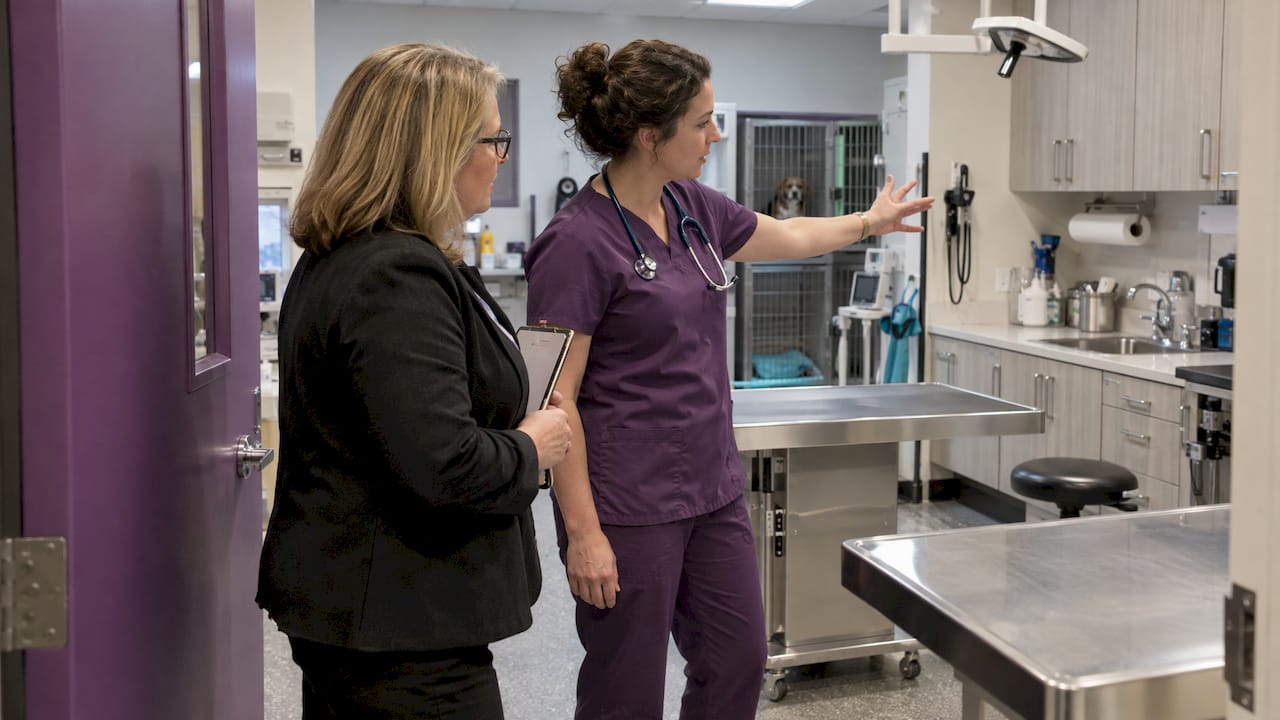
An AAHA-accredited animal hospital is a companion-animal practice that chose to be evaluated by an outside body, the American Animal Hospital Association, and met its standards for facilities, patient care and clinical protocols. It is a useful signal that a hospital’s routines have been checked by someone other than the hospital itself. It says nothing about any single veterinarian, and you can confirm it in a minute. Urban Veterinary Associates in Westmont, IL is AAHA accredited and Fear Free certified, so we will use our own hospital as the example of how to read the label.
TL;DR
- AAHA accreditation is voluntary. A hospital that has it chose to be evaluated against AAHA’s hospital standards, and a hospital without it can still give good care.
- It applies to the hospital, not to an individual vet. Every practicing vet also needs a state license.
- The standards cover areas such as anesthesia, dentistry, pain management, surgery, pharmacy, laboratory work and medical records.
- Verify a claim with AAHA’s Hospital Locator, not with a logo on a website.
- Urban Veterinary Associates is AAHA accredited, and our surgery, including TPLO, is done in house with published, itemized pricing.
Table of Contents
- What AAHA is and what accreditation means
- What the standards look at
- AAHA-accredited hospital or “AAHA-certified vet”?
- How to verify that a hospital is accredited
- What accreditation does not tell you
- Published prices you can check before you call
- Why accreditation matters most when surgery is on the table
- A note for nervous pets
- Promo: meet the team before you need us
- Perspective: why we pursued accreditation
- FAQ
- Sources
What AAHA is and what accreditation means
AAHA is a nonprofit association for companion-animal veterinary hospitals in the United States and Canada. Accreditation is how a hospital shows it meets AAHA’s standards. According to PetMD’s 2025 explainer on AAHA, a hospital pursues it voluntarily, is evaluated by a third party, and must meet or exceed the mandatory standards. It is reevaluated routinely, and the standards are updated over time.
Compare it to a restaurant inspection that you ask for rather than one the county forces on you. The county license says a restaurant may open. The extra review says someone looked at how the kitchen actually runs.
Two plain facts help you read the label:
- It is not a legal requirement. A veterinary practice can legally serve the public without it, so the lack of a logo proves nothing bad about a clinic.
- It is a signal, not a guarantee. It tells you the systems around your pet’s care were evaluated. It cannot promise an outcome for any one animal, and no vet can.
What the standards look at
The evaluation is hospital-wide, not just the exam room. PetMD reports that AAHA assesses areas including anesthesia, dentistry, emergency and critical care, human resources, laboratory, medical records, pain management, patient care, pharmacy and surgery, with more than 900 standards in total depending on the type of care a hospital provides.
Here is what that list means for you at the clinic.
| Area | What it means for your pet |
|---|---|
| Anesthesia | Procedures are planned with a protocol for monitoring and recovery, not improvised. |
| Pain management | Pain is treated as part of care, before and after procedures. |
| Dentistry | Cleanings and dental work follow written standards. |
| Surgery | Surgical care is evaluated as its own area of the hospital. |
| Laboratory and pharmacy | Tests and medications are handled under defined routines. |
| Medical records | Your pet’s history is documented so any doctor can follow it. |
| Human resources | Staff are trained and supported, which affects how consistent care is. |
That table is our plain-language reading of what each category covers, not AAHA’s wording. The takeaway is that accreditation reaches past the exam to anesthesia, pain control, records and surgery. Those areas matter most when something goes beyond a routine vaccine visit.
PetMD’s veterinarian author also makes a point worth repeating: standards and guidelines support individualized care. They are not a rigid, one-size-fits-all recipe. A good accredited hospital still tailors its plan to your pet, your budget and your goals.
AAHA-accredited hospital or “AAHA-certified vet”?
People search for both phrases, but they are not the same thing. Accreditation belongs to the hospital. There is no AAHA badge for an individual veterinarian. What every practicing vet does hold is a state license.
So when you read a clinic’s website, you are really asking two questions:
- Is the hospital accredited? Check that with AAHA.
- Is the doctor who will treat my pet experienced with the problem? Ask the clinic directly, and ask to meet the doctor.
The second question matters most for surgery. At our hospital, Dr. Torok performs orthopedic and soft tissue surgery, including TPLO, CCL stabilization, patella luxation correction and fracture repair. The same doctor who examines the dog performs the operation, and you can book an orthopedic consultation for $117 to meet her before you commit to anything.
How to verify that a hospital is accredited
A logo on a homepage is easy to copy. The reliable route is AAHA’s own Hospital Locator, which lists accredited hospitals by location. Search by your ZIP code or city and confirm the clinic appears. Accredited hospitals typically go through a comprehensive on-site evaluation about every three years, so a current listing reflects a recent review.
A quick checklist for any new vet in Westmont, Hinsdale, Oak Brook or anywhere else:
- Look the clinic up in the Hospital Locator.
- Read the published prices. A hospital confident in its standards usually has nothing to hide about costs.
- Ask who does surgery. Find out whether the doctor who diagnoses your pet also operates, or whether you will be referred elsewhere.
- Ask what the first visit looks like. You should hear a clear plan, not a vague promise.
- Ask how nervous pets are handled. Gentle handling is a care standard in its own right.
What accreditation does not tell you
Accreditation does not tell you how a hospital treats a frightened cat, whether prices are posted, or whether you can get a same-week surgical consult. Those are separate questions, and they decide whether a visit feels good.
That is why we pair AAHA accreditation with two other commitments:
- Fear Free certification. Our team is trained in low-stress handling, so an anxious dog or cat is not left waiting in a loud lobby with a pet who is already shaking.
- Published, itemized pricing. Our prices are on our pricing page. When a plan is written, every line is itemized and you are free to decline any line.
Together those answer the three things most owners really want to know: is the care checked, is the handling gentle, and will I know the cost before it starts.
Published prices you can check before you call
Most owners who look for an accredited hospital are also comparing costs. These are the prices posted on our site as of November 2026. Check the pricing page for the current list.
| Service | Price |
|---|---|
| Wellness visit | $85 |
| Illness visit | $95 |
| Orthopedic consultation | $117 |
| Young canine wellness, age 0 to 6 | $154.00 |
| Comprehensive internal organ and infectious disease screen | $291 |
| Young feline wellness | $225 |
| Senior feline wellness | $310.00 |
| Fecal analysis | $44.50 |
| TPLO surgery | $4,900 |
Our VIP Wellness Plans start from $45.99 per month for owners who prefer to spread routine care across the year.
Why accreditation matters most when surgery is on the table
For a healthy puppy at a vaccine visit, nearly any licensed vet can do the job well. Accreditation earns its keep when the case is bigger: a dog that has torn a cruciate ligament, a knee cap that keeps slipping out of place, a fracture, or an older pet that needs anesthesia. In those cases, the standards for anesthesia, pain management, surgery and records are the ones you are leaning on.
Many general practices refer these cases out, which can mean a drive to a specialty center and a wait for an opening. We keep orthopedic and soft tissue surgery in house. If you have been quoted a long wait elsewhere, you can start with a consultation here. Our page on TPLO surgery for dogs in Westmont explains what the procedure involves, and TPLO is published at $4,900.
A few questions to bring to any surgical consult:
- Who will perform the surgery, and have I met them?
- What is included in the quote, line by line?
- How is pain managed during and after the procedure?
- Which rechecks are planned, and who sees my dog at each one?
You should get plain answers. If a plan has lines you do not want, you decide, and we itemize so that choice is real.
A note for nervous pets
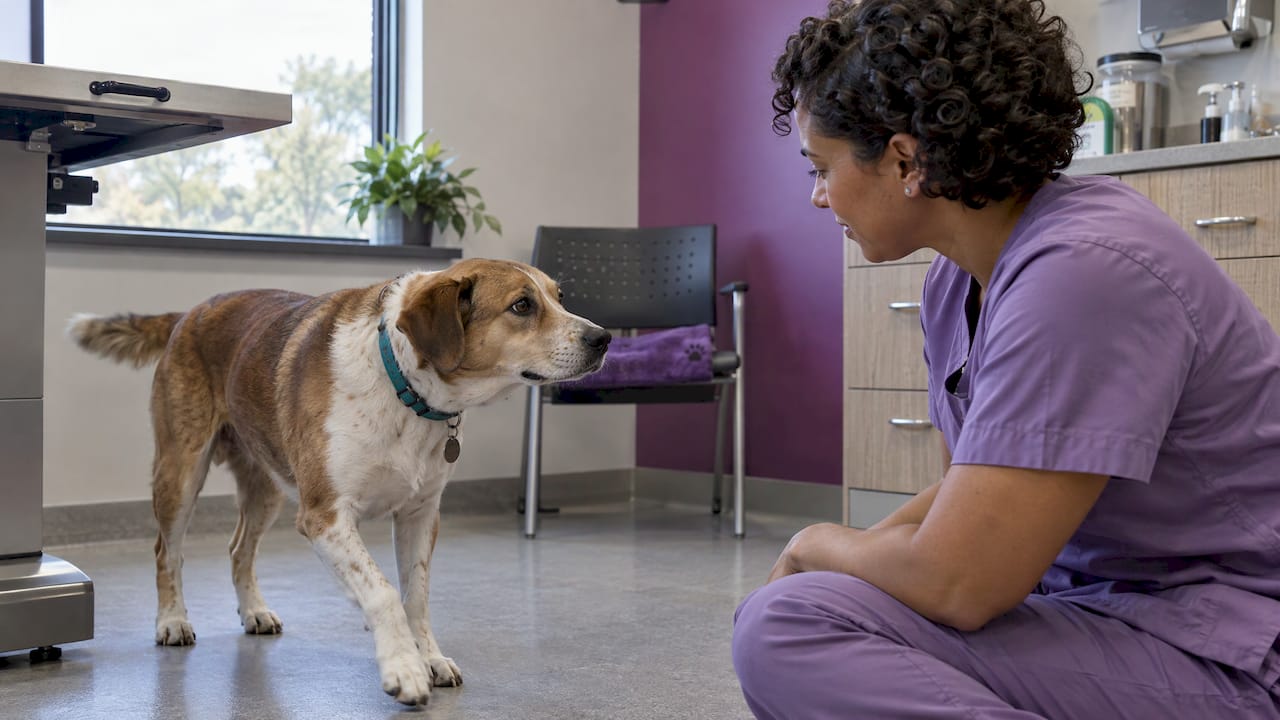
Accreditation covers the clinical side of care. A scared pet needs something else: a calm, low-stress visit. If your dog trembles at the door or your cat hides in the carrier, tell the front desk when you book. Fear Free handling is about reducing fear and stress at every step, so the visit does not turn into a memory your pet carries to the next one. Call ahead and we will plan the visit around your pet.
Promo: meet the team before you need us
Urban Veterinary Associates has been open in Westmont since 2017. We are a family, female and veteran owned hospital with three veterinarians and about ten support staff, caring for dogs and cats. Services include wellness exams, dental care with dental X-rays, senior pet care, allergy and skin care, laser therapy, diagnostics, heart care and urgent care during open hours. If you are new to the area, a wellness visit at $85 is a simple way to start.

If your dog has a limp or a diagnosis, book an orthopedic consultation through our TPLO surgery page or our home page. For sick or injured pets during the day, call ahead so we can plan for you, and confirm our hours when you call, since we are not open every day of the week.
Perspective: why we pursued accreditation
We chose to be evaluated because we think a hospital’s standards should be something a stranger can verify, not something we simply tell you. Accreditation looks at the unglamorous parts of medicine: anesthesia, pain control, records, surgery. Those are the parts you cannot see from the waiting room, and they matter most when your dog is on the table.
We pair that with two choices we believe in. First, we publish prices and itemize every plan, because you should know what a visit costs before it starts and you should be able to decline any line. Second, we keep surgery in house, so the doctor who examines your dog is the one who operates, and you do not have to drive across the county or wait months for an opening.
A clinic’s logo is where the conversation starts. Come in, meet the doctor, look at the quote, and decide whether we are the right fit for your pet.
Dr. Jessica Torok
FAQ
Is an AAHA-accredited vet better than one that is not?
Accreditation shows a hospital was evaluated by a third party against detailed standards, which is a useful indicator of evaluated care. It is voluntary, though, and non-accredited hospitals can still provide excellent care. Use it alongside published prices, the doctor’s experience and how the team handles your pet.
Does “AAHA certified vet” mean the same thing?
No. Accreditation applies to the hospital, not to a specific veterinarian’s skill. Every practicing veterinarian holds a state license, and for a particular procedure you should ask about that doctor’s experience directly.
How do I check whether a hospital is really AAHA accredited?
Use AAHA’s Hospital Locator and search by your location. Accredited hospitals typically go through on-site evaluations about every three years, so a hospital that appears in the locator has been reviewed recently.
Is Urban Veterinary Associates AAHA accredited?
Yes. We are an AAHA accredited and Fear Free certified hospital in Westmont, IL, open since 2017. You can also look us up in the Hospital Locator to confirm.
Sources
Questions are better answered in person.
Book a visit and ask us directly. Real time availability, no deposit, no credit card.